Texas Science Teacher Resource Hub
Free scope and sequences, TEKS breakdowns, phenomenon ideas, and engagement activities for the 2024 Texas science standards.

🚀 Jump to Your Grade
Pick your grade level and go straight to your TEKS standards, aligned resources, and teaching tools.
-
4th
→4th Grade Science20 standards • Matter, Earth, Energy & more
-
5th
→5th Grade Science19 standards • Matter, Ecosystems, Space & more
-
6th
→6th Grade Science24 standards • Forces, Energy, Matter & more
-
7th
→7th Grade Science27 standards • Cells, Chemistry, Earth & more
-
8th
→8th Grade Science24 standards • Newton's Laws, Space, Genetics & more
8th Grade TEKS Standards
Click any standard to see what it means, how to teach it, where students get stuck, and aligned resources.
Modeling Matter
"Explain by modeling how matter is classified as elements, compounds, homogeneous mixtures, or heterogeneous mixtures."
💡 What This Standard Actually Means
"Explain by modeling". Students are drawing, building, or arranging visual models that show what each kind of matter looks like at the particle level, then using those models to explain why a substance fits one category and not another. The standard's "including" list signals where to focus your students: elements, compounds, homogeneous mixtures, and heterogeneous mixtures. Students should be able to look at a real-world substance, picture the particles inside it, and place it into the right category. Instruction can take many forms, such as particle-diagram drawings, colored bead bag builds, sorting cards, and side-by-side "zoom in" sketches of substances.
Every substance students encounter, from the air in the room to the chocolate milk in the cafeteria, fits into one of four categories. Two are pure substances (elements and compounds). Two are mixtures (homogeneous and heterogeneous). Sorting matter this way is the foundation of everything else they'll do in chemistry, and the "by modeling" verb means students aren't just memorizing definitions. They're picturing the particles.
An element is a pure substance made of only one type of atom (oxygen, copper, gold). A compound is a pure substance made when two or more elements are chemically bonded together (water, table salt, carbon dioxide). A homogeneous mixture (also called a solution) looks completely uniform throughout because the particles are evenly distributed. Saltwater, air, and brass all look like one thing even though they're really mixtures. A heterogeneous mixture has visibly distinct parts you can pick out. Sand and gravel, chicken noodle soup, and trail mix all qualify.
The core understanding students should walk away with is that the way particles are arranged inside a substance tells you what category it belongs in. One type of atom alone is an element. Two or more bonded together is a compound. Mix things without bonding and you get either a uniform-looking mixture or a chunky one. A good model makes that difference visible at a glance.
The first year I taught this, I drilled definitions and gave a vocabulary quiz on Friday. Kids could recite "homogeneous means uniform throughout" all day long and still couldn't tell me whether saltwater was a compound or a mixture. The fix was making them draw it. I had them fold a piece of paper into four boxes and sketch the particles for an element, a compound, a homogeneous mixture, and a heterogeneous mixture. One color of circle. Two colors stuck together. A scattered but even mix. A chunky mix. Once they had that picture in their head, I could hold up a bottle of Italian dressing or a glass of saltwater and ask, "What does this look like if we zoom in?" That's when it clicked. The drawing did the teaching.
⚠️ Misconceptions Your Students May Have
These are some of the most common misconceptions. Knowing what to look for can help you get ahead of them.
"Saltwater is a compound because the salt and water are combined"
Saltwater is a homogeneous mixture, not a compound. The salt dissolves in the water, but the salt is still salt and the water is still water. No new substance forms. You can boil the water away and the salt comes back. A true compound (like the salt itself, NaCl) requires the elements to chemically bond into something new with a different identity.
"If a mixture looks uniform, it must be a pure substance"
Plenty of mixtures look perfectly uniform. Air is a homogeneous mixture of nitrogen, oxygen, argon, and other gases, but it just looks like nothing. Vinegar looks like one liquid but it's water with acetic acid mixed in. Looking uniform only tells you it's homogeneous. To know if it's a pure substance, students need to think about whether the particles are all one kind (or one bonded combination) or whether different things are floating around together.
"If you can see separate parts, it has to be a compound"
Visible separate parts mean the opposite. That's the signature of a heterogeneous mixture. Trail mix, chicken noodle soup, and a salad are all heterogeneous mixtures because you can pick out distinct ingredients. A compound is bonded at the atomic level, where students can't see the parts at all without a particle model. If the eye can spot the chunks, it's a mixture.
"Air is one substance because it looks like nothing"
Air is a homogeneous mixture. It's mostly nitrogen (about 78 percent) and oxygen (about 21 percent), with smaller amounts of argon, carbon dioxide, and water vapor. Looking like nothing is not the same as being nothing. The particles are spread out evenly so we can't see the difference, but if you cooled air down enough, the gases would separate out at different temperatures and prove they were never one substance.
📓 Teaching Resources for 8.6A
These resources are aligned to this standard.
🌎 Phenomenon Ideas for 8.6A
Use these real-world phenomena to anchor your lesson. Show students the phenomenon first, let them wonder, then build toward Modeling Matter as the explanation.
Where Did the Salt Go?
Stir a spoonful of table salt into a clear glass of water and watch it disappear. The water still looks like water. There's no salt at the bottom of the glass and nothing floating on top. Take a sip and you can taste it. Pour it into a shallow dish and let the water evaporate over a few days, and there's the salt again, sitting in the bottom. It was there the whole time, just spread out evenly between the water particles.
"If the salt is invisible but still there, did it become part of the water? How would you draw a particle model of the salt water that explains why it's a mixture and not a compound?"
Italian Dressing in the Fridge
A bottle of Italian salad dressing sits in the fridge between meals. The oil floats up to the top, the vinegar sinks to the bottom, and the herbs settle into a layer in the middle. Shake it up and for a few minutes everything looks evenly mixed. Set it down and the layers come right back. Same bottle. Same ingredients. Two completely different appearances depending on whether someone just shook it.
"Is the dressing a homogeneous mixture or a heterogeneous mixture? Does your answer change depending on whether the bottle has been shaken? How does that help you decide which category it belongs in?"
Air Looks Like Nothing
Hold up an empty plastic bag. To the eye, there's nothing in there. But that bag is full of air, and air is not one substance. Roughly 78 percent of every breath students take is nitrogen. Around 21 percent is oxygen. The rest is argon, carbon dioxide, water vapor, and a few others. The particles are so small and so evenly spread that there's no visible sign of the mixing.
"If air is made of several different gases, why does it look and feel like one thing? What category of matter does that put it in, and what does the particle model look like?"
💡 Free Engagement Ideas for 8.6A
Four-Box Particle Model Drawing
Have students fold a piece of paper into four equal boxes and label them element, compound, homogeneous mixture, and heterogeneous mixture. Using one or two colors of circles, they draw a particle model in each box. The visual contrast across the four boxes is the whole lesson. Use it as a quick formative check the next day by handing them a list of substances and asking which box each one fits.
Mystery Substance Sorting Stations
Set up six numbered stations with real substances students can examine: a piece of copper wire (element), a sample of table salt (compound), a glass of saltwater (homogeneous mixture), a small dish of trail mix (heterogeneous mixture), a sealed jar of air, and a sample of granite. Groups rotate through and classify each one with a written justification. Reveal the answers as a class debate at the end.
Bead Bag Build
Give each group three small zip-top bags and two colors of beads (or M&Ms). Bag one: a single color, evenly arranged. Bag two: two colors stuck together in pairs. Bag three: two colors mixed evenly. Bag four: two colors in clumps. Students label each bag as element, compound, homogeneous mixture, or heterogeneous mixture and explain how the arrangement of "particles" matched the category.
Dissolving Sugar Before-and-After
Each group gets a clear cup of warm water and a sugar cube. They draw a "before" particle model showing the sugar cube and water as separate things. They drop the cube in, stir until it dissolves, and draw an "after" model showing the sugar particles spread out among the water particles. Reinforces that dissolving makes a homogeneous mixture and the sugar didn't disappear.
Year-at-a-Glance Pacing Guides
Practical, week-by-week scope and sequences for grades 4-8. These tell you what to teach and when to teach it. Updated for the 2024 TEKS.
Free download. No email required. Updated for the 2024 TEKS with linked activities for every unit.
Trusted Across Texas
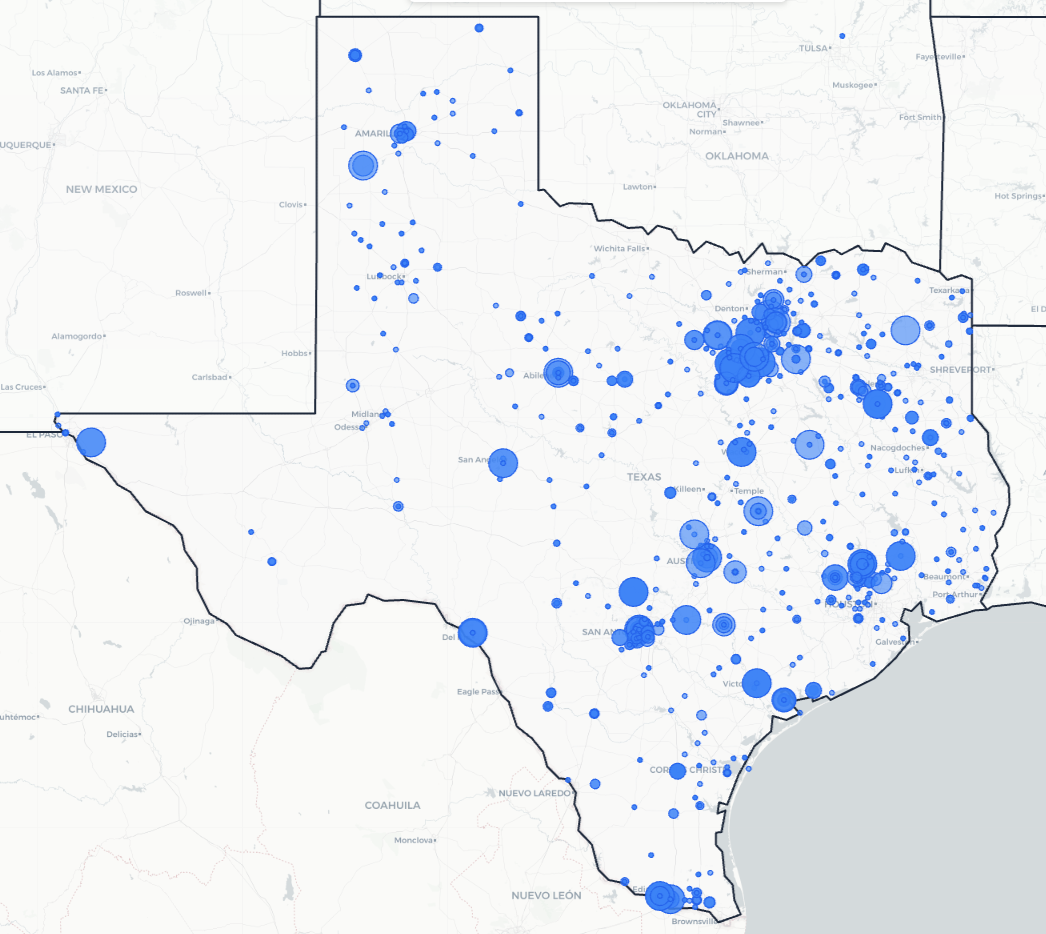
From the Rio Grande Valley to the Panhandle, Texas science teachers are using Kesler Science to save time and engage students.
Texas Schools and Districts
Love Kesler Science
What Teachers Are Saying
Give Your Science Teachers Everything They Need
School and district licenses give your teachers access to every resource they need, including station labs, inquiry labs, anchoring phenomena, presentations, escape rooms, and much more. One purchase covers the grade levels you need.
- ✓ PO-friendly. We accept purchase orders
- ✓ Volume discounts for 10+ teachers
- ✓ Free PD session for departments of 5+
- ✓ Aligned to the 2024 TEKS standards
See It in Action
Book a walkthrough and we'll show you how Kesler Science fits your campus.
Book Demo CallNo pressure, no hard sell